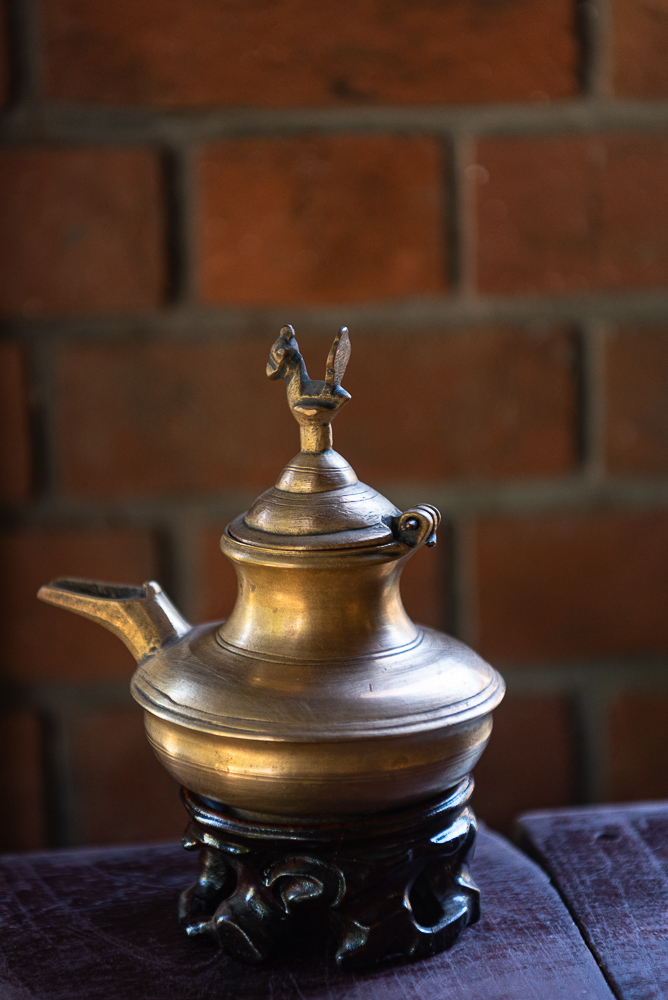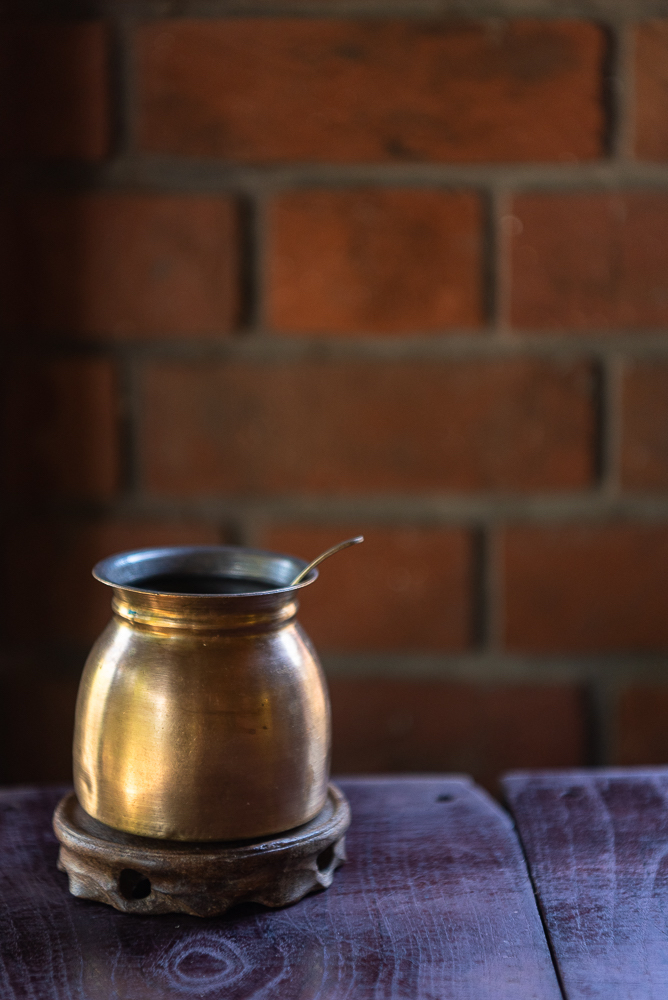
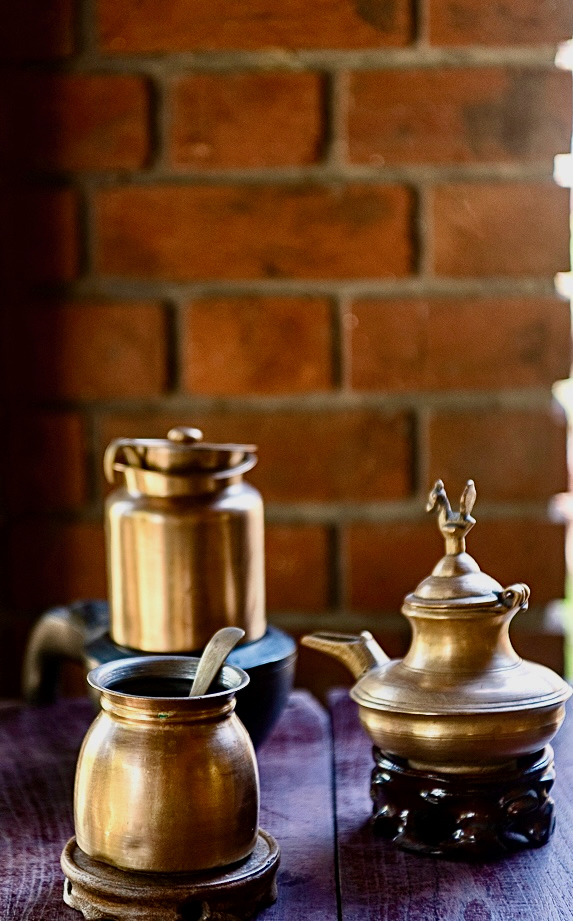
Vadhi/Vahdi, the older and clay version of Vadhi—the traditional ghee dispenser of the yore—offers a glimpse into the evolution of vessels through time. From what little I understand, the Vahdi, made of clay, would predate the Vadhi, which is crafted from copper or kansa, as metal vessels emerged much later in human history. The progression of vessel-making reflects our journey through materials: from leaves to hollowed gourds, then to hand-formed clay vessels shaped around those gourds, followed by vessels carved from wood and stone, and eventually to those made of metals like copper, brass, kansa, and iron to the modern ones in steel, aluminium and glass.
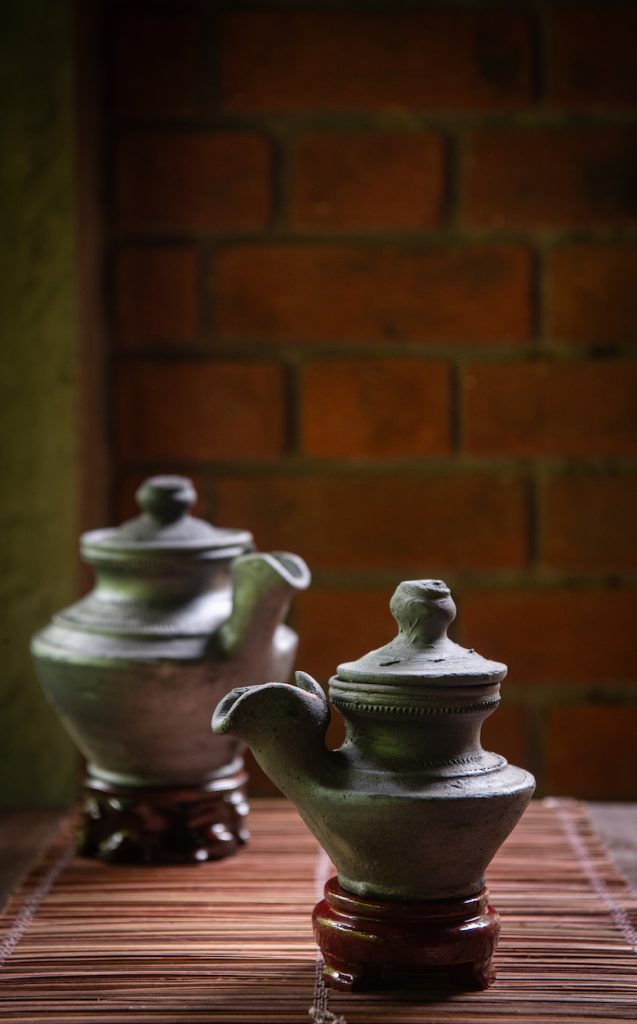
In a post I shared last year, I talk about the once-iconic metal oil and ghee containers that graced our kitchens. But long before they existed, it was the wooden and clay oil and ghee pourers that were in everyday use. Historical accounts suggest that even after metal vessels were introduced, they remained largely confined to royal and elite households. The common folk continued to rely on clay cooking and serving food.
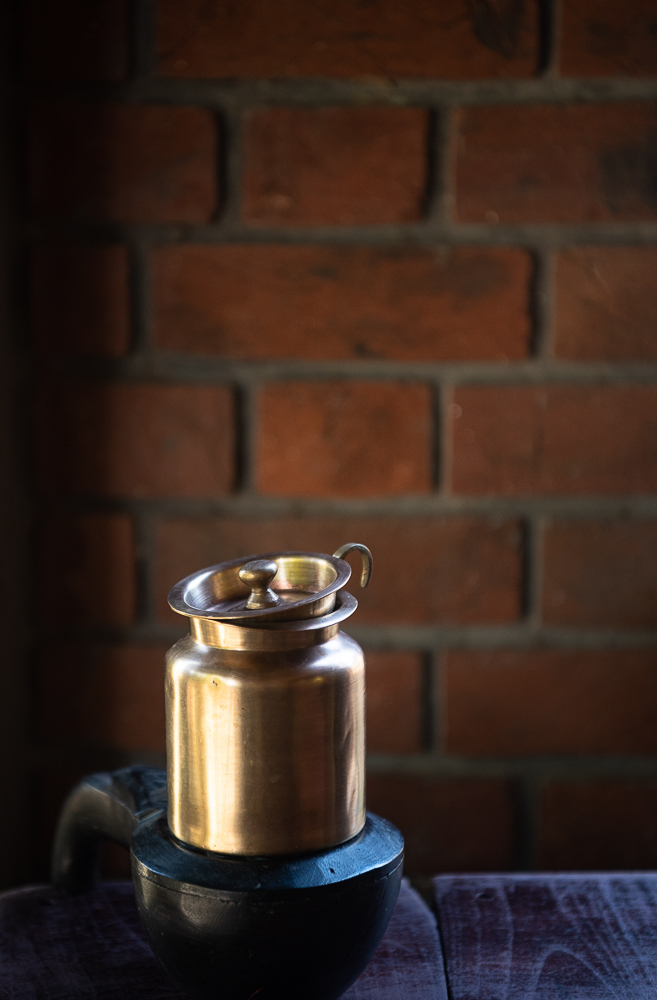
Because of their distinctive spouts, both Vahdi and Vadhi also served as ceremonial ghee pourers, used during festive pangat feasts where hosts were expected to pour ghee generously—continuing until the guest signaled them to stop. The rounded bottoms of these vessels allowed them to be placed securely over embers to warm and melt the ghee, while their narrow, easily sealable mouths helped keep rats and other pests away.