My first memories of Ghooghri come alive through Ba’s vivid stories of her childhood. She would describe feeding her favourite cow, ghooghri, a warm mixture of bajra, jaggery, and ghee just after it had birthed a calf. Years later, we realised it was the very same preparation she made during Makar Sankranti, offering it to the stray cattle that walked past our home.
But bajra ghooghri was never merely cattle feed. It was also favourite and sometimes the only snack readily available to my Ba’s generation, she recalls helping herself with scoop from the bowl before serving the cow. As children and tweens, we could never quite comprehend her fondness for it until I began to research food and understand the significance of these so called frugal foods. Almost thirty years later, I encountered Ghooghri again, as a snack, this time at an organic food festival in Rajkot, now in a savoury avatar, carrying an entirely different story.
Interestingly, Ghooghri, also known as madindo, totha, baakda (and perhaps other yet-to-be-discovered names), has a pan-Gujarat presence. It is offered to gods and goddesses during important life events, served to guests, fed to cattle on Makar Sankranti or to a cow that has just delivered, and handed to hungry children as a sustaining snack. Over the years, I have met Ghooghri on numerous occasions and that too in its many avatars.
For Kathiawaris, it is bajra ghooghri. In the north-eastern Adivasi belt, it may be a mixture of wheat, maize, and chana, cooked overnight in salted water over gentle embers. A primitive tribal community I am currently studying distributes boiled wheat kernels mixed with jaggery and ghee to celebrate births. Among Koli-Patels, soaked (uncooked) bajra grain and mung beans are offered upon the death of an elderly family member. In community hostels and homes alike, savoury bajra ghooghri, vagharela mung, or desi chana frequently appeared as a humble, repeated breakfast.
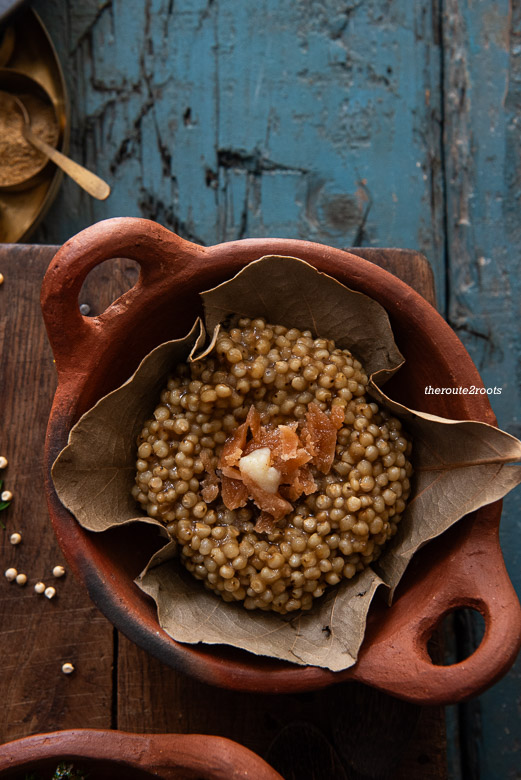
This unassuming preparation, sometimes a single cereal, sometimes a mix of grains like bajra, jowar, maize, or wheat, often combined with moong beans or chana, makes for one of the most wholesome, nourishing “superfood” snacks long before the word became fashionable.
And perhaps that is what Ghooghri truly is, bahoorupi. Ever-changing in name, grain, ritual, and region, yet true in its essence: simple, nourishing, and deeply rooted in our traditional foodways.
Recently, I came across two versions of jowar ghooghri, and the urge to turn them into a new post nudged me to bring out my stock of the Dadar-Goti variety of jowar. At a farmer’s market, a farmer (from whom I had purchased it) had insisted I make khichri with it. When I asked what set this jowar apart, he gently corrected me, it should not simply be called jowar, he said, but Dadar Goti.
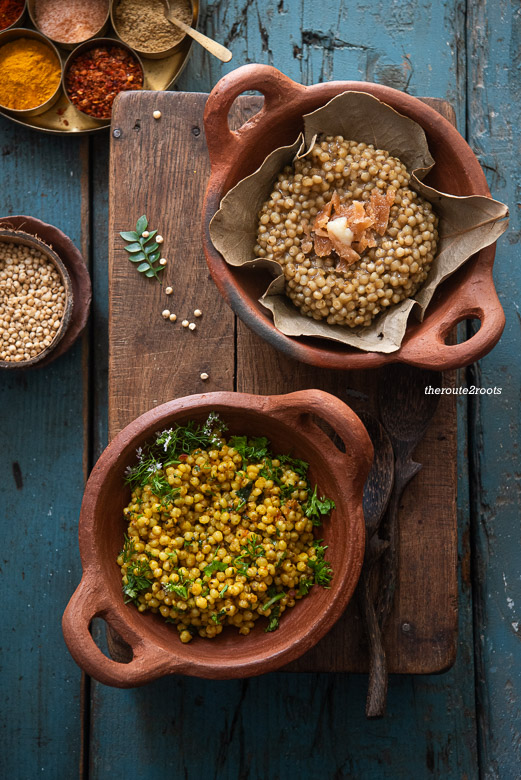
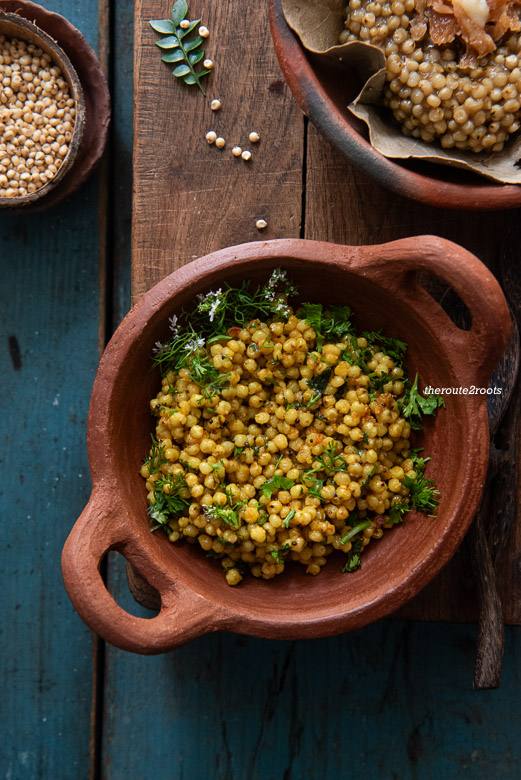
Dadar Goti is a native variety of jowar (sorghum) that thrives in the south-eastern belt of Gujarat. It is known for its tender texture and inherent mithash. I made Jowar ni Ghooghri two ways, sweet and savouryand both had their own distinct charm. If you allow your creative self to take the lead, the savoury version has the potential to transform into a hearty salad or even a vibrant chaat.
Ingredients
Method
- Wash and soak the jowar for up to 8 hours.
- Pressure cook with three times the water until the kernels are tender.
- Divide the cooked jowar into two portions and transfer one portion to a bowl.
- While the jowar is still warm, add shredded jaggery and ghee.
- Mix well until the jaggery melts and coats the grains evenly.
- Enjoy warm or at room temperature.
- To the remaining jowar, add salt, sugar, red chilli powder, and lemon juice. Mix well.
- Heat oil in a kadai and add mustard seeds.
- Once they begin to splutter, add the seasoned jowar.
- Cook for a few minutes, stirring gently to allow the flavours to meld.
- Garnish with finely chopped coriander and serve warm.