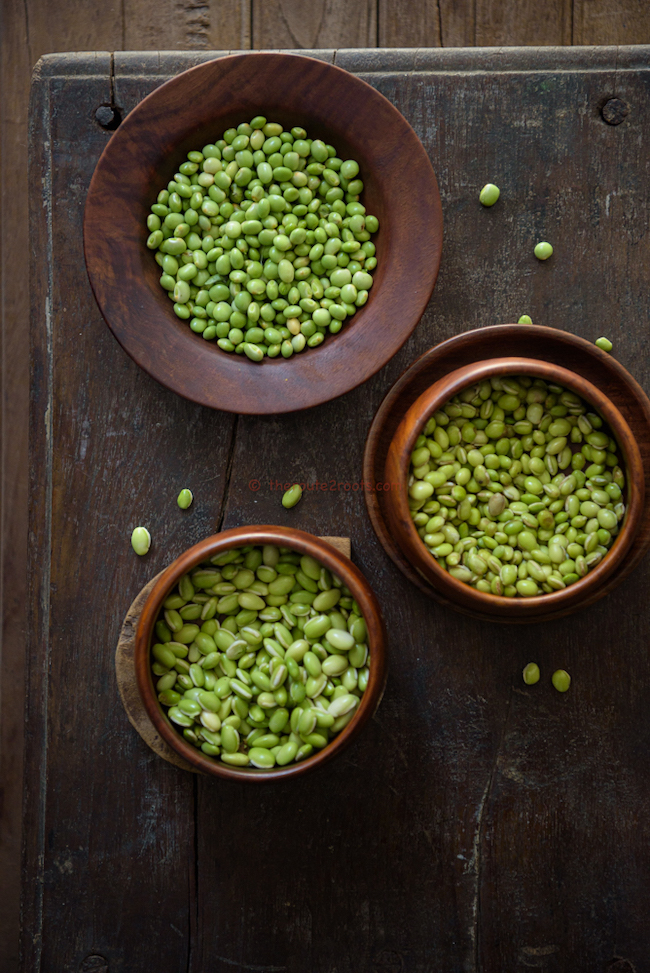
My last couple of posts mentioned the term Lilva (fresh beans), so I thought of sharing a picture in case you wondered what they are!
Mind you, Gujjus take their lilva stock very seriously; these are among the most prized and revered winter produce, with the power to elevate any seasonal food preparation to the next level.
Growing up, one of our favourite chores was basking under the gentle winter sun while shelling fresh tuver or papri pods to reveal these emerald beauties hidden inside. A large joint family meant heaps of pods waiting to be shelled. I still remember how Ba kept two separate bowls—to distinguish the ripe beans from the tender ones. The tender beans, valued for their sweetness and vibrant green colour, were reserved for kachori, sambhariyo masala (stuffing), pulao, or any dish that celebrated their fresh hue. The mature beans, meanwhile, found their way into everyday shaak or khichri.
The beans from Surti dana wali papri or Katar gaam ni papri are intrinsic to any undhiyu—or even its toned-down everyday versions. And the valor beans? They shine beautifully on their own or lend themselves wonderfully to the many stews we cook during winters.
Over the years, as nuclear living replaced joint family systems, time became more precious than produce, the omnipresent Ba slowly disappeared from the family landscape, and “convenience” took over. Most of us now buy shelled beans directly from vegetable vendors. Yet, the insistence on the tenderest and greenest lilva persists even today. Accepting a day-old lilva is almost an offence 😉.
There is something inexplicable about the Gujju obsession with tender vegetables—whether gourds or beans!
Featuring from top to bottom: Tuver na Lilva (fresh pigeon peas), Papri na Lilva (Surti papri beans), and Valor na Lilva(flat bean peas).