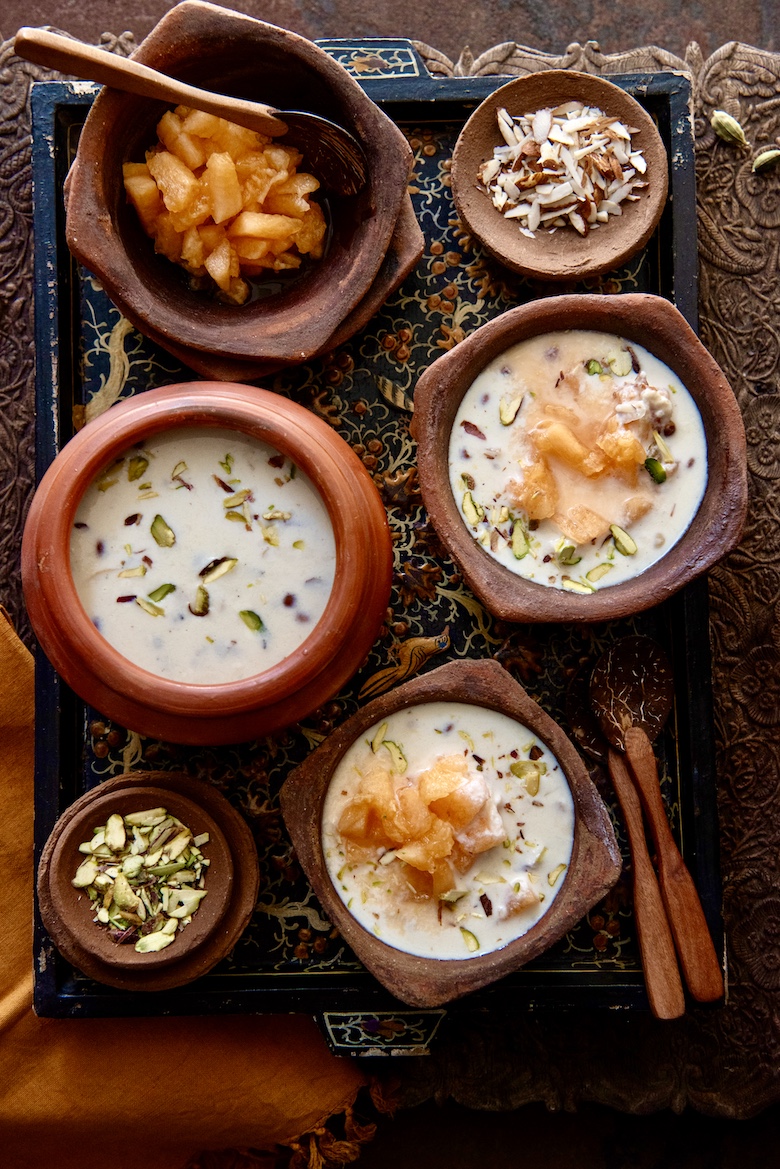
The fruit-based Doodhpaks I have been discovering lately bring back fond memories of the fruit-salad dessert we grew up with in the 1970s. This delightful combination of evenly diced seasonal fruits topped with custard (thickened with vanilla-flavored custard powder) was simply called fruit salad. Those who grew up in the 1960s, 70s, and mid-80s will recall the relief of indulging in copious bowls of chilled fruit salad during scorching summers. It was a time when air conditioners were nonexistent, and ice cream wasn’t as affordable, so mothers found creative ways to keep us cool and happy with homemade ice creams, jelly-custard, china-grass puddings, popsicles made with khus or rose sherbet, and, of course, generous servings of fruit salad.
In Gujarati cuisine, Doodhpak is a thinner version of kheer, at least, that is how it is commonly prepared in most households and commercially. Until I studied the cuisine in depth, I believed this to be the standard. However, the very name “Doodhpak” suggests prolonged cooking of milk, so how could it remain thin? The version of Doodhpak I grew up eating did not align with its traditional preparation. As I explored Doodhpak recipes from the 1930s, 50s, and later decades, I found that they specifically call for cooking the milk until it thickens, changes color, and reduces by 30 to 40%. This means that true Doodhpak should be thick enough to hold its inclusions firmly. The prolonged cooking also caramelizes the sugar, giving Doodhpak its characteristic pale brown hue. Over the past few years, I have been preparing Doodhpak this way, and it has completely transformed my preference for this iconic Gujarati mishtan. From being indifferent to it, I have grown to absolutely love the Doodhpaks I now cook and document.
In doodhpaak made with grains like rice or wheat they are added to the milk when it is still cooking, but in fruit based versions fruits like custard apple, orange, or rock melon are folded into the Doodhpak after it has been cooked and cooled to room temperature. The resulting Doodhpak, enriched with charoli and almond slivers, offers a mildly caramelized, luxurious mouthfeel, while the addition of seasonal fruits enhances its flavor and texture.
Make and try it!