During my recent (and ongoing) efforts to update theroute2roots website, which also involved recategorising the documented recipes into the major food groups of our thali and beyond, I realised the કચુંબર/kachumber section was very underrepresented. I wonder how such an important category slipped my mind; maybe it reflected our overall negligence towards kachumbers. I hadn’t paid much attention to their existence, out of sight, out of mind, in this case.
Kachumbers used to be such a thing. Each season brought a new set of them, where seasonal vegetables were teamed with chana dal or peanuts (for texture and protein), or simply flavoured with everyday spices. They were made with intent, planned to pair with the dal-shaak on the menu. At times, a well-made seasonal kachumber even replaced the shaak. I wonder why we replaced them with sliced onions or a sliced ‘green salad’.
Up until the 1960s, most Gujarati cookbooks had a chapter each dedicated to kachumber, sambhara, raita, and chutney, because each of them held a special place on a thali.
The word kachumber stems from the Gujarati word કચરવું/kacharvu/ to mash or pound, so for a kachumber to qualify as one, its hero ingredient needs to be grated or very finely chopped. A lightly cooked kachumber is called a dhoongariyu, while sambhara or stir-fries belong to a league of their own.
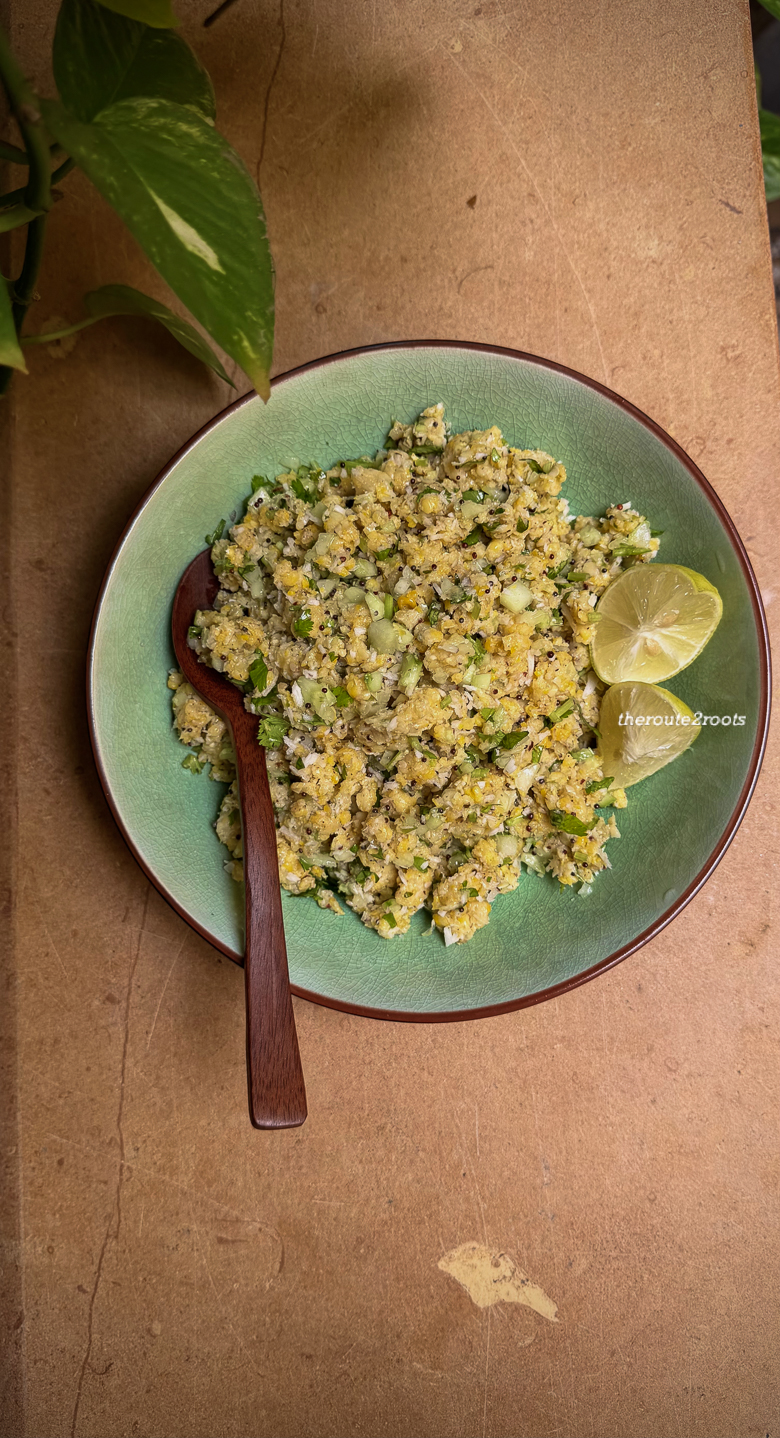
To make up for this lapse, I began curating this series on Gujarati kachumbers. The first one was documented during peak summer, but as always, life happened, and the posts never made it out. Nonetheless, kicking off the kachumber series with the seasonal, heirloom Makai-Kakdi nu Kachumber.