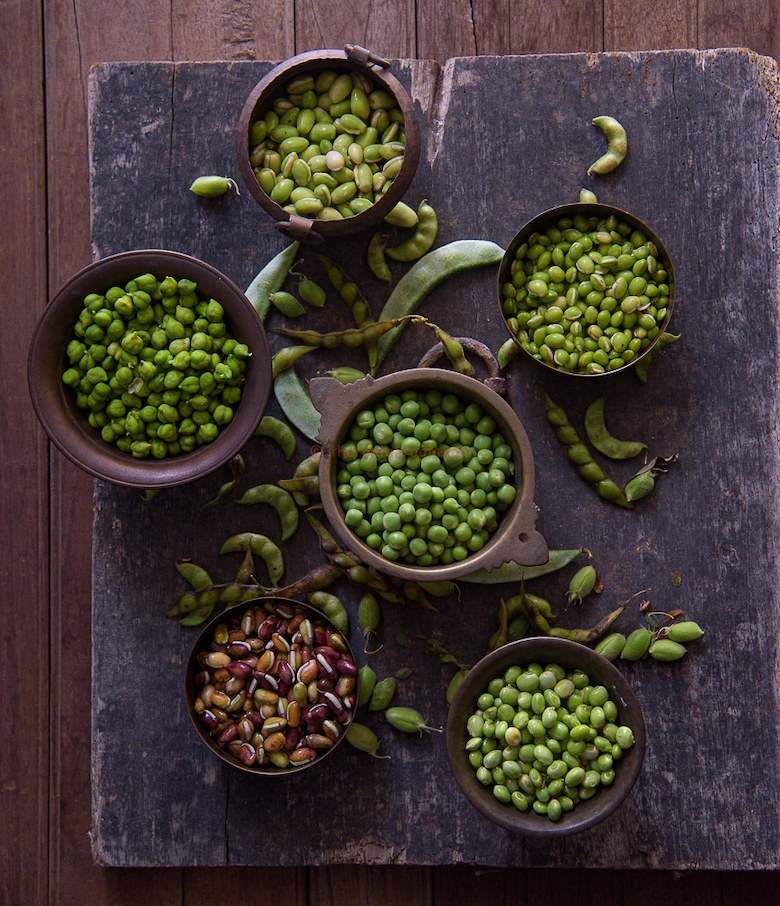
Meet the લીલવા/Lilva brigade; the lush green beans that rule our kadais, griddles, and thalis during winters. Lilva, derived from lilu, meaning green, is the umbrella term for the tender green beans/seeds of various legume pods that thrive during this season. In Gujarati cuisine, the lilva of tuver (pigeon peas), vatana (green peas), valor (multiple varieties of butter and broad beans), papri (flat bean varieties), and chana/popta (fresh chickpeas) are both prized and celebrated for their tenderness.
Gujaratis are notorious for demanding kunu (tender) vegetables year-round—whether gourds, greens, or beans. Buying vegetables is a deeply sensory task, and selecting the right produce is an art in itself. Vegetables are examined for their appearance, aroma, and texture. Anything that shows even the slightest sign of maturing is termed ghardu, too aged for ideal cooking and consumption. Beans are chosen at their greenest, most tender stage, and the brightest among them often become festive farsans like Lilva ni Kachori, Surti Patties, or tri-coloured Handvo.
The famed South Gujarati Ubaadiyu and Charotari Matla Undhiyu are each made using distinct varieties of five-bean papri. The Charotari papri is known for being exceptionally tender and melt-in-the-mouth (insight shared by Vasudha auntie @farmingmatters). Surti Undhiyu traditionally includes two varieties of three-bean papri, one valued for its lilva and the other for its tender pods—each selected with great care.
Alongside cheel/bathua, palak, and methi, lilva remains one of the most sought-after greens of Gujarat’s winter cuisine.