Suppose you had the responsibility of buying vegetables as a teenager. In that case, I am sure mother’s instructions of how to select the right kind of vegetables still ring in your ears every time you are at a vegetable cart, hand picking bhindi, tindora, tameta, bataka… kuna/tender not charge/hardy, cabbage has to be heavy, cauliflower florets tightly held together, carrots and beans need to snap and that thin and not thick-skinned capsicums. The ones that had become somewhat elusive. The capsicums we found were even-sized, and colored ones, thick-skinned, which my mother would reject for her cooking needs especially making sambhariya marcha/stuffed capsicums.
In the mid-80s, when I had begun shopping for vegetables, the hybridization of food was underway, and finding those tasty-tender veggies, my mother was looking for was becoming difficult.
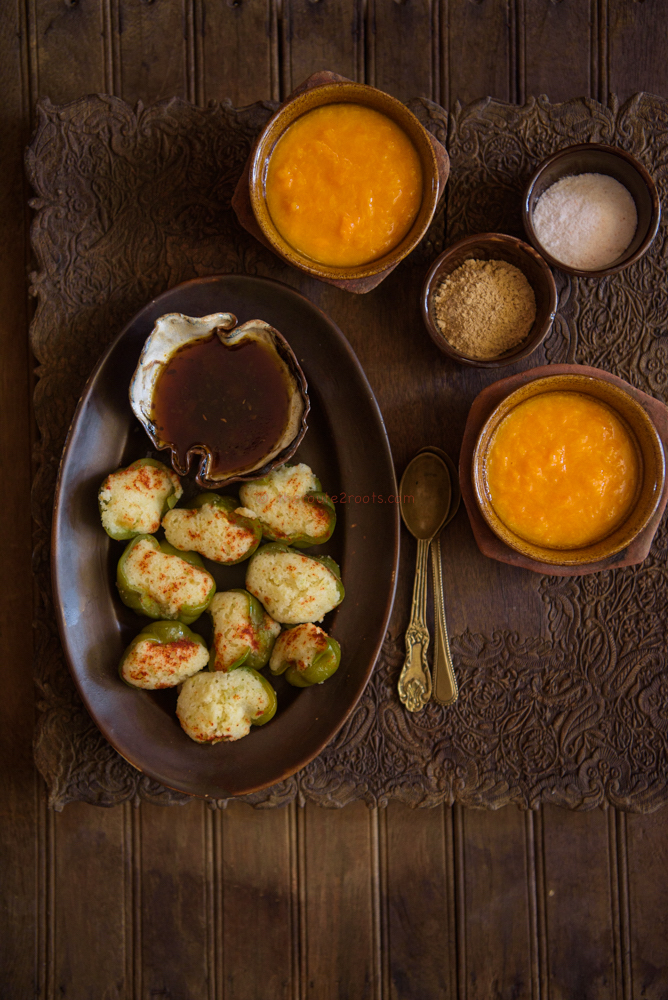
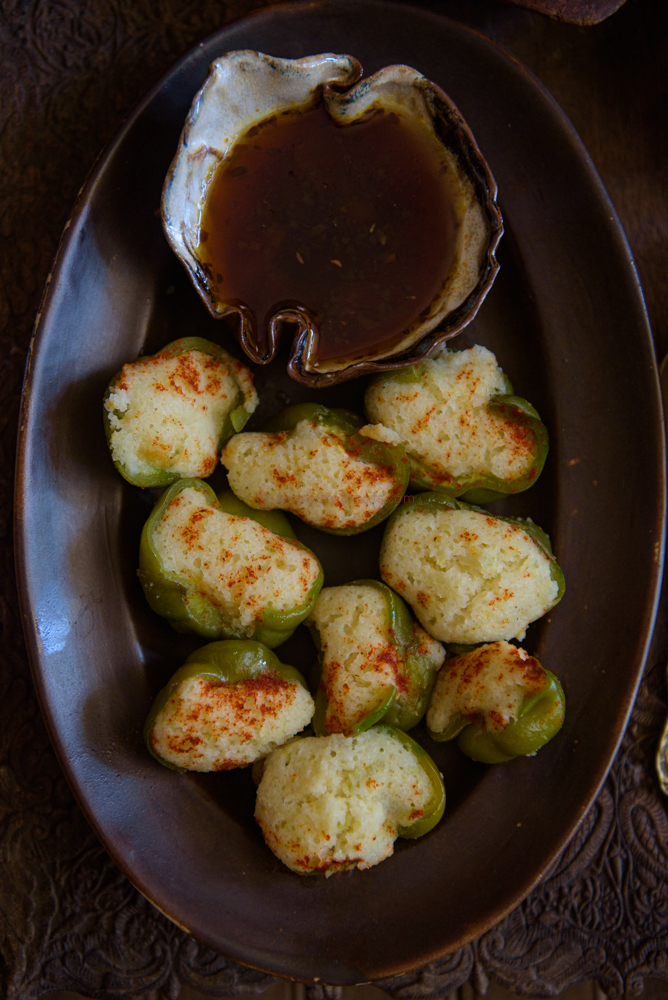
Now, as part of my research, I read recipe books written in the 1940s and 50s that mention vegetables I have never seen at the fresh produce markets of Ahmebdad; I can relate to the situation my mother faced at that time. A few years back, I came across a recipe called Marcha na Dhokla; the recipe required Dhokla batter to be poured into capsicum halves and then steamed. Since reading it, I have wondered how you can have such a big dhokla; how would the thick skin of steamed capsicum taste, and would the skin and batter cook simultaneously? But if this was a wise old recipe, it had to be relevant.
Recently, while I was touring the interiors of south Eastern districts of Gujarat, we were just on time for a weekly Haat/market at one of the villages we were staying, and the vegetables I found there were absolutely non-urban. Leafy greens I had never seen before, winter beans from the hedges that receive a continuous water flow and a variety of tubers. And it was here that I found the tiniest peppers/capsicums I had ever seen; they were thin-skinned too. Baby Capsicums, as one would call them now. Suddenly the Marcha na Dhokla recipe I had been aching to make flashed in my mind, the recipe made sense. Of course, I did not miss the opportunity to bring them back home and create these Marcha na Dhokla I had been waiting to cook for the last five years.
Wish to recreate these Dhokla? Look out for those odd-shaped, dented, thin-skinned, tiny peppers which will never pass the test of being called perfect capsicum.
Ingredients
Method
- Wash and wipe-dry the capsicums.
- Simultaneously, heat the water and prepare the steamer.
- In a finger bowl prepare a mix of salt, soda-bi-carb and 2 teaspoon oil.
- Ensure that the fermented dhokla batter is ready (if it has been in the fridge bring it to room temperature).
- Cut the capsicums in half (vertically), carefully remove the stem and seeds. Take care not to tear the capsicums of else the batter will flow out.
- Apply the prepared oil mix in the inside and outside of the capsicum shells.
- Once the water in the steamer comes to a boil, arrange the prepared shells on the steamer plate, make sure they are properly seated on the steamer plate.
- Add a pinch of soda-bi-carb to the dhokla batter, stir well and pour it in to the shells. Once all the shells have been filled up, sprinkle the red-chilli or pepper powder over the batter, shut the steamer and steam for 8-10 minutes on medium to high flame. The dhokla are done when they are firm to touch in the centre.
- Turn off the flame allow the steamer to rest for a minute or two, brush the dhokla tops with oil and serve as snack or as part of the meal.