This article has its origins in the pandemic years, when the world came to a standstill. We were based in Singapore at the time, and travel restrictions along with prolonged lockdowns made our annual winter visit to Gujarat impossible. It was perhaps the first time in over a decade that we would miss a Gujarati winter.
What began as an attempt to reconnect with home through food soon evolved into a deeper exploration of the many shaak–muthiya combinations that grace winter kitchens across Gujarat. After the pandemic, once we returned home, I continued cooking, documenting, and learning about these seasonal preparations. Over the years, the article grew alongside that journey, gradually evolving into a reflection on winter produce, regional cooking traditions, and the enduring appeal of shaak and muthiya.
Papdi, Lilva, Valor and the Art of Gujarati Winter Shaaks
Living in a country that grants me access to some of the finest produce and ingredients from around the world often makes me feel like a privileged expat. Yet, there are certain foods that remain impossible to replace. The fresh methi available here lacks the aroma and gentle bitterness of the methi I grew up with. Finding tender bhindi, something Gujaratis obsess over, is nearly impossible, and red winter carrots cost a small fortune.
But what I have never found here are the ingredients that define winter in my part of Gujarat: tuver na dana (fresh pigeon peas), papdi (Surti beans), ratalu (purple yam), aamba haldar (mango ginger), and lilu lasan (green garlic chives). While summer ambassadors like Kesar, Hafus, and Paayri mangoes have travelled far beyond India, our winter greens and beans rarely do (and rightly so, else it would lose it.
Perhaps that is why I never had the opportunity to miss them. Most winters were spent at home. This year was different.
So when I unexpectedly came face-to-face with packets of papdi and fresh tuver beans at a local supermarket, I could not resist adding them to my cart. Never mind that I could neither touch nor smell them before buying. The tuver beans turned out to be disappointing, but the papdi kept its promise.
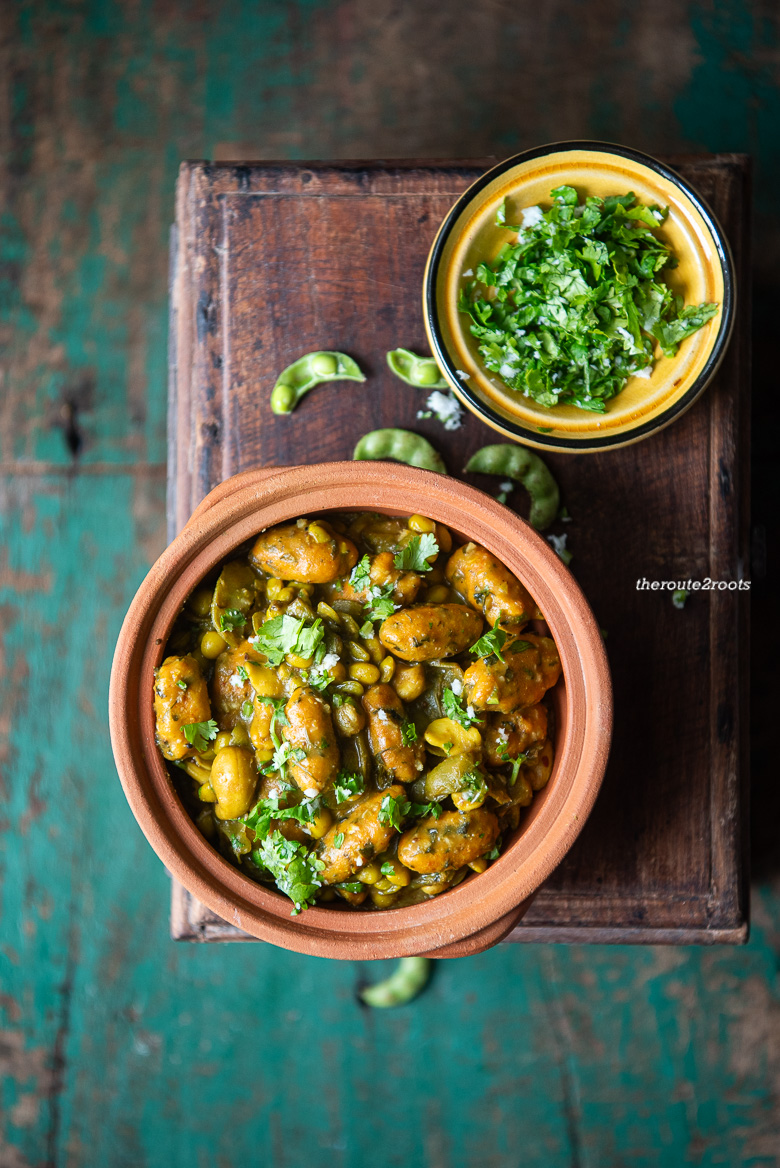
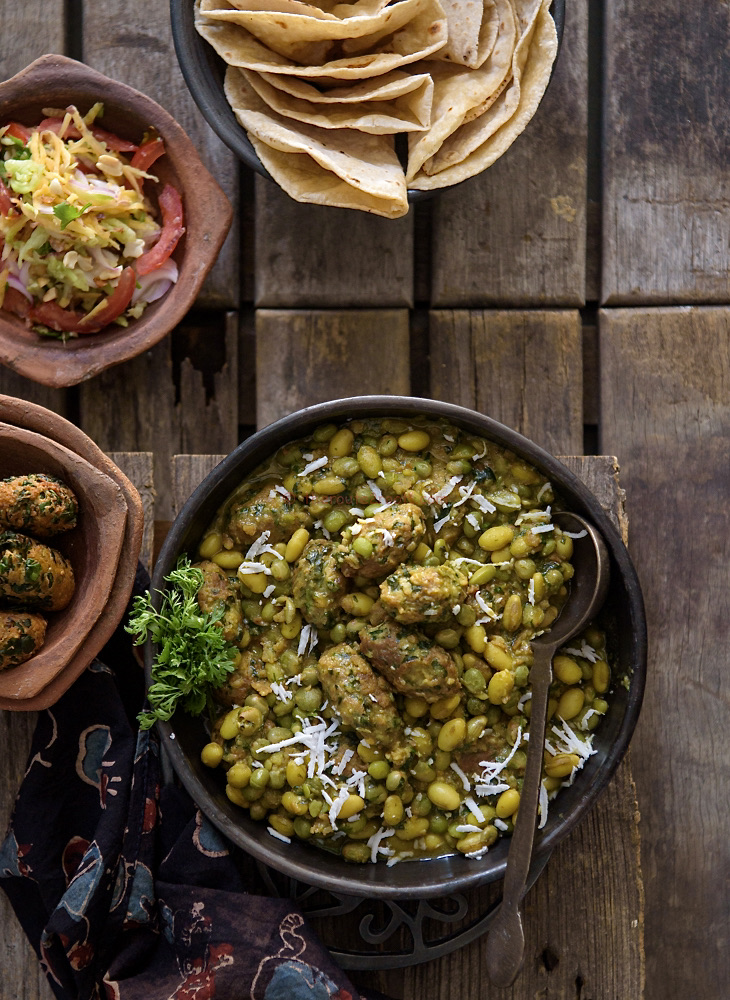
I immediately decided to cook Surti Papdi ma Methi na Muthiya (pictured above), one of the finest examples of the shaak-muthiya combinations that Gujarati cuisine has perfected over time. In Gujarati cuisine Muthiya is considered both nashto and farsan.
The Queen of Gujarati Winters
The three beaned Surati papdi (a key ingredient of the Surati Undhiyu) is native to Katargaum, a village on the outskirts of Surat, hence the name Katargam ni Papdi. Come winter, it becomes one of the most sought-after vegetables in the market. Vendors routinely sell out of it within hours. In many households, one is taught to judge the quality of papdi not merely by appearance but by aroma.
And what an aroma it is.
As papdi cooks, its fragrance fills the entire home and often drifts beyond it. There was a time when neighbours could identify which house was cooking papdi simply by following the aroma carried through the air.
As my papdi simmered gently on the stove that evening, that familiar aroma filled my kitchen. For a brief moment, I travelled back home.
Winter on a Gujarati Plate
If there is one season that truly showcases the genius of Gujarati vegetable cookery, it is winter. The markets burst into shades of green. Fresh beans, tender pods, leafy greens, and seasonal vegetables arrive in abundance, and households hurry to make the most of them before the season passes. It is also the season of lilva, the tender and fresh beans that appear in countless forms and flavours.
These emerald jewels find their way into stews, farsan, undhiyu, stuffed vegetables, pulaos, and countless regional specialties. For many Gujaratis, a winter plate without lilva feels incomplete.
Among the many beloved combinations of the season, few can rival Lilva ma Methi na Muthiya or Papdi ma Methi na Muthiya. The pairing is so natural that it is difficult to imagine one without the other.
Yet papdi and lilva are only part of the story.
The World of Valor
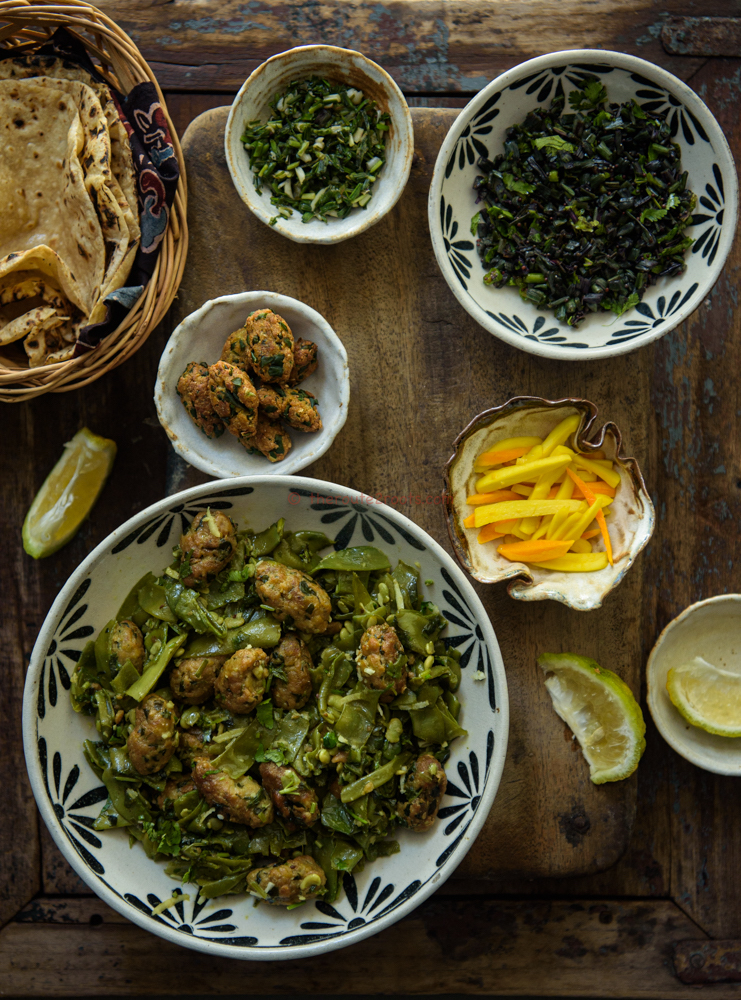
Alongside papdi, another bean quietly dominates winter cooking, Valor/flat beans.
While papdi and its lilva often become part of the grand ensemble that is Undhiyu, valor and its beans frequently take a different route. They are paired with muthiya, dhokli, or brinjal to create dishes that are equally beloved, though perhaps less celebrated.
There are several varieties of valor used across the state. The Chapti Valor (flat valor) is particularly prized for preparations such as Valor ma Muthiya. Like papdi, valor demands respect from the cook. The texture must remain intact, the colour should stay vibrant, and the flavours must remain fresh and distinct.
Why Gujarati Winter Shaaks Demand Skill
People often assume that Gujarati winter shaaks are simple because they rely on relatively few ingredients.
In reality, they demand remarkable skill.
The challenge is not in assembling a long list of spices but in preserving the integrity of the produce. The beans should remain green. The vegetables should taste like themselves. The texture must be just right, not undercooked, not mushy.
Over the years, I have realised that the taste and appearance of slow-cooked foods remain unmatched. I prefer a generous amount of peanut oil and gentle cooking over pressure cooking. Fried muthiya, too, remain my personal favourite over their stewed counterparts.
The prerequisites of cooking winter vegetables well can intimidate even seasoned home cooks, and for a long time they discouraged me from documenting this vast repertoire on the blog.
Why These Recipes Matter
What finally prompted me to overcome that hesitation was a conversation with Aneri of Kharif Farm. During our discussion, she remarked that many people from Generation Y and Z can no longer identify vegetables such as valor papdi, nor can they distinguish between French beans and mirchi valor.
The observation stayed with me.
We have enthusiastically embraced broccoli, lettuce, Swiss chard, zucchini, and other global vegetables. Yet somewhere along the way, we risk losing familiarity with our own gourds, greens, beans, and seasonal produce.
That loss would be far greater than we realise.
Because these vegetables are not merely ingredients. They carry stories of regions, farming practices, family traditions, seasonal rhythms, and cooking techniques refined over generations.
More Than Just a Vegetable
What fascinates me most about dishes such as Papdi ma Methi na Muthiya or Valor ma Muthiya is that they represent something larger than themselves.
They speak of a cuisine deeply connected to seasonality. A cuisine that values tenderness above all else. A cuisine where a vegetable is chosen by its aroma, where colour matters, where texture is everything, and where cooking is as much about restraint as it is about flavour.
And perhaps that is why the scent of papdi cooking on the stove can transport one across continents.
Because sometimes home is not a place. Sometimes, home is simply the aroma of winter beans simmering gently in a pot.