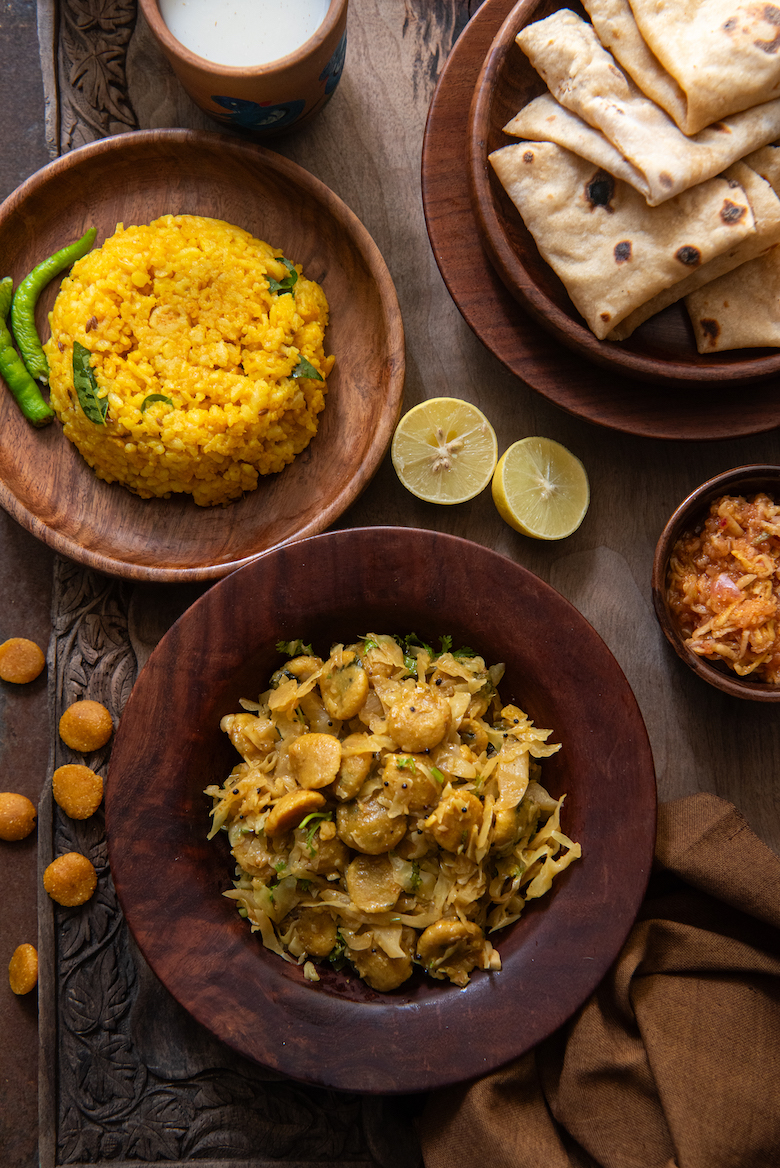
To make the Dhokli In a mixing bowl, combine all the ingredients listed under Dhokli, except the oil. Mix the dry ingredients thoroughly, then add the oil and rub it in. Gradually pour in water and knead into a semi-stiff dough. Continue kneading until the surface is smooth. Cover the dough and let it rest for 15–20 minutes. Once rested, pinch off portions the size of a large pea. Roll them into small balls and flatten each into a thin disc—these are the dhoklis. Keep them covered while you prepare the cabbage subzi.
To make Kobich Shaak Heat oil in a large kadai. When hot, add the mustard seeds. Once they begin to splutter, add the sliced green chilies and sauté for a minute. Quickly add asafoetida and turmeric powder, followed by the shredded cabbage. Season with salt, stir well, cover, and cook over a gentle flame. When the cabbage is partly cooked, sprinkle in the coriander and cumin seed powder. Cook for a few more minutes, then add the prepared dhoklis along with a tablespoon of oil and ¼ cup of warm water. Cover the kadai with a lid that can hold some water, and pour a little warm water over it—the condensation will help the dhoklis cook without turning mushy. Avoid stirring too often, as the dhoklis may break.
The dhoklis are done once they swell and change color. At this stage, stir in a little sugar and lemon juice, cook briefly, and turn off the flame.
Serve hot with rotli, alongside chaash and kachumbar.