Ingredients
Method
- Place a wide and deep heavy bottom sauce pan over medium flame.
- Add water into the saucepan, after it heats up drop in the shredded jaggery.
- Allow the jaggery added water to boil for 4-5 minutes.
- In the meantime, sieve the flour in a wide plate/thali.
- Add 1/4 cup ghee and nicely rub it into the flour.
- Once the water has boiled enough, add 2 tablespoons ghee to it.
- Stir well with the back of the wooden spoon or take thin rolling pin.
- Reduce the flame to low.
- Now scatter the flour over the simmering water, poke holes on the surface.
- The water will gradually rise through the holes and wet the flour, coax the water to rise to the top from the sides by making space with the help of rolling pin.
- Few minutes into the cook, break the soaked flour with help of rolling pin (as seen in the following video).
- Stir it all well, but with gentle hands. If you apply force the lapsi will come together like a dough.
- Cover and cook and repeat the process couple of times every 2-3 minutes. By stirring at regular interval we are breaking the lapsi into smaller balls, each time the size of the balls will grow smaller.
- After 10 minutes the lapsi should be cooked, press between your finger and thumb to check the doneness. If it does not stick to the hands the lapsi is done.
- Turn off the flame. Keep the Lapsi covered as it will continue to cook in residual heat. Ever 5 minutes, give it a stir to break the balls. Cover after each stir.
- By the end the lapsi would have broken into marble sized balls and the rolling pin will have nothing sticking to it after the stir.
- The Lapsi will also feel light, and stirring it through rolling pin will become much easy.
- In the end, stir in couple of spoon full of ghee.
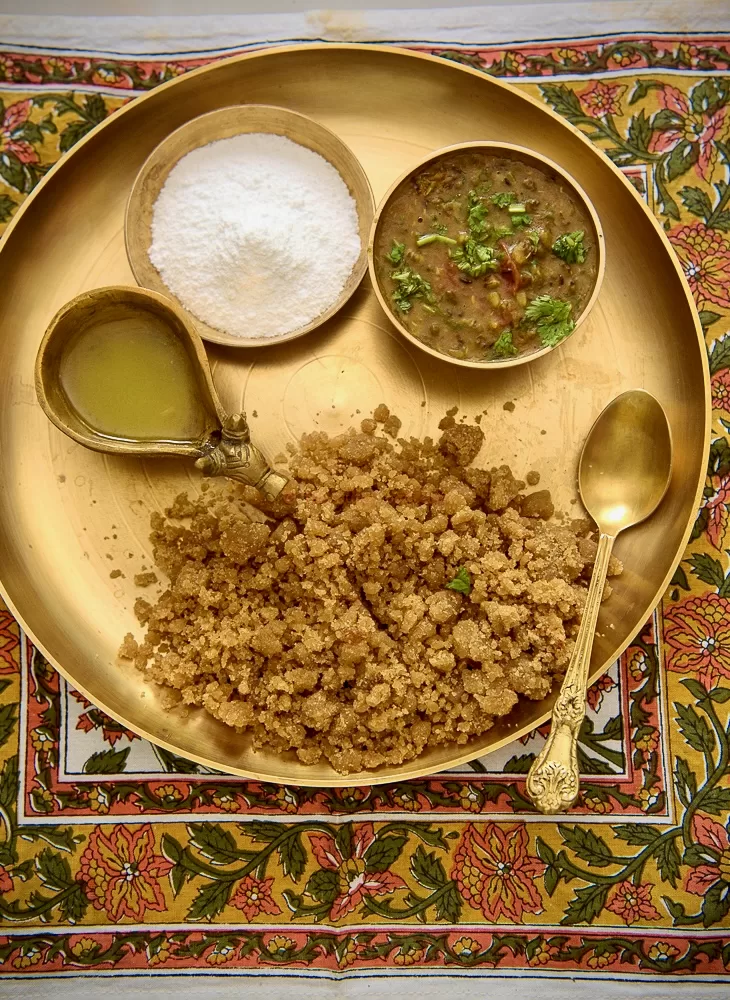
- Serve hot or at room temperature with warm ghee and ground sugar.
- Lapsi is first offered to family deity and then enjoyed as Prasad. It is served along with a mung bean curry.
Notes
Always maintain low flame. The stirring with rolling pin is to be done with gentle hands.